Hanbok rental and free palace entry: the rules nobody explains clearly
Do you really get free entry to Seoul's palaces if you wear hanbok?
Yes, at all 5 royal palaces (Gyeongbokgung, Changdeokgung, Deoksugung, Changgyeonggung, Gyeonghuigung) plus Jongmyo Shrine — but only if you're wearing a complete hanbok: the jeogori (top) and either a chima (skirt) or baji (trousers) as the bottom. A single accessory, a 'hanbok-inspired' outfit, or a top without the matching bottom generally doesn't qualify, and staff can turn away outfits they judge incomplete.
| Where | Rental shops near Gyeongbokgung’s Gwanghwamun gate and Bukchon |
| What qualifies | Jeogori (top) + chima or baji (bottom), complete two-piece set |
| Applies to | All 5 royal palaces + Jongmyo Shrine |
| Time needed | Rental windows typically run a few hours |
| Best time | Weekday mornings, right at opening, outside peak season crowds |
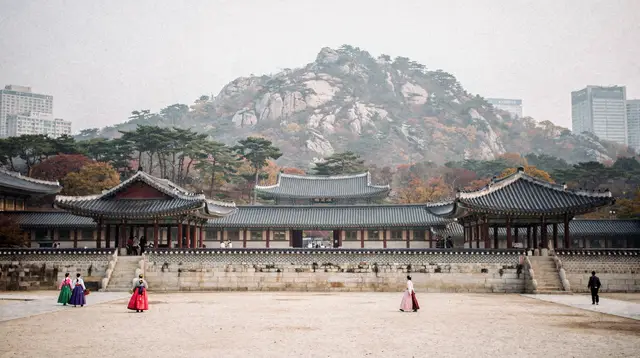
Rent a hanbok anywhere near Gyeongbokgung and you’ll notice something: half the foot traffic on the plaza is in traditional dress, and none of them are paying the entrance fee. That’s not a coincidence — it’s a real, official policy — but the rule for what qualifies is more specific than most rental shop signage or blog posts let on, and getting it wrong means a slightly awkward conversation at the ticket gate.
Where the “hanbok = free entry” rule actually applies
The perk covers Seoul’s five royal palaces — Gyeongbokgung Palace, Changdeokgung Palace, Deoksugung Palace, Changgyeonggung Palace, and Gyeonghuigung Palace — plus Jongmyo Shrine, the Joseon dynasty’s royal ancestral shrine. Wear a qualifying hanbok to any of these and you skip the entrance fee entirely, at any of them, on any day they’re open.
It does not automatically extend to other heritage sites, museums, or paid attractions around the city. If a rental shop or a blog implies the perk is a general “wear hanbok, get discounts everywhere” pass, that’s an overstatement — it’s specifically the five palaces and Jongmyo.
What actually counts as a “complete” hanbok
This is where most of the confusion lives. The rule is built around two pieces worn together:
- Jeogori: the short, wrap-front jacket or top, tied with a ribbon (otgoreum) at the chest.
- Chima or baji: either the chima (a high-waisted, full skirt — the traditionally feminine silhouette) or baji (loose-cut trousers — the traditionally masculine silhouette), worn as the bottom half.
Wearing both pieces together is what qualifies as a “complete” hanbok for free entry. A jeogori worn over your own jeans, a single decorative item, or a costume-style outfit that only gestures at hanbok without the proper two-piece construction can be judged incomplete at the gate — and staff do make judgment calls, particularly during busy weekends when lines are long and enforcement gets stricter.
Practically, this almost never becomes an issue if you rent from one of the dedicated hanbok shops near the palaces — they know the rule cold and default to renting full sets specifically because their business depends on customers getting the free-entry perk. The risk mostly shows up if you buy a cheap “hanbok-style” outfit online before your trip, or if you separate the pieces (wearing only the top, saving the skirt for photos later) to stay cooler in summer heat.
The rental shops: what to expect
Hanbok rental shops cluster thickly around Gyeongbokgung’s Gwanghwamun-facing entrance and along the streets leading into Bukchon Hanok Village, with a smaller concentration near Changdeokgung and Insadong. Expect:
- A basic cotton hanbok set (jeogori + chima or baji) as the standard offering, with premium silk or more elaborate embroidered sets priced higher.
- Hair styling and simple accessories (hairpins, small bags) often bundled in or offered as an add-on.
- Rental windows typically running a few hours, enough to cover a palace visit and a walk through Bukchon’s hanok streets for photos — ask specifically about the return deadline, since it varies by shop.
- Storage lockers for your own clothes and bags while you’re dressed, which most shops include.
Comparing two or three storefronts before committing is worth the extra ten minutes — pricing, set quality, and included extras vary more than the identical racks of colorful hanbok in every shopfront window might suggest. This hanbok rental package bundles the outfit with confirmed Gyeongbokgung entry, which removes the guesswork if you’d rather not shop around in person.
The different styles of hanbok you’ll be offered
Rental shops generally stock a few distinct tiers and styles, and it’s worth knowing the difference before you’re standing in a shop trying to decide quickly. Traditional hanbok sticks closely to historical proportions and simpler color palettes, generally the most photogenic against a palace’s wooden architecture and the style most shops default to for the standard rental rate.
Modern or “fusion” hanbok reinterprets the silhouette with contemporary fabrics, brighter or more elaborate patterns, and sometimes shorter or more fitted cuts — visually striking and popular for photos, but worth double-checking against the two-piece jeogori-plus-chima/baji rule if free palace entry matters to you, since some fusion pieces stretch the traditional construction further than others.
Couple and family sets are common and usually simply mean coordinating colors or patterns across a jeogori-and-chima/baji outfit for each person, rather than a fundamentally different rental category — useful if you want matching photos without the shop needing anything beyond stock combinations. Men’s hanbok (baji trousers rather than a chima skirt) is stocked at essentially every rental shop, though the range of colors and patterns tends to be narrower than the women’s selection. Kids’ sizes are widely available too, and children generally qualify for the same free-entry rule as adults as long as their outfit meets the same two-piece standard.
Which palace suits a hanbok visit best
Not every palace offers the same hanbok-and-photography experience, and it’s worth matching your choice to what you’re after. Gyeongbokgung is the default choice for most visitors and for good reason — it’s the largest and most visually grand of the five, hosts the well-known Royal Guard Changing Ceremony at scheduled times through the day, and sits directly next to the highest concentration of rental shops, making the whole morning logistically simple.
Changdeokgung, a UNESCO World Heritage Site, offers a quieter, more intimate atmosphere with its famous Huwon rear garden (accessible only via a separate, timed, limited-capacity tour — book that piece well ahead if it interests you), and tends to draw fewer crowds than Gyeongbokgung on a typical day.
Deoksugung, in the middle of modern downtown Seoul, gives a striking contrast between traditional architecture and surrounding skyscrapers, plus a well-known Royal Guard Changing Ceremony of its own — a good pick if you want your hanbok photos to include some sense of the old-meets-new character of the city.
Changgyeonggung and Gyeonghuigung see meaningfully fewer visitors than the other three, which suits travelers who’d rather have a hanbok photo without dozens of other rented hanbok in the background — the tradeoff is fewer rental shops immediately nearby, so you’d typically arrive already dressed from a Gyeongbokgung- or Bukchon-area shop. For a fuller comparison of what makes each of the three most-visited palaces distinct, see our Gyeongbokgung vs Changdeokgung vs Deoksugung guide.
Why this policy exists in the first place
The free-entry-with-hanbok rule isn’t an arbitrary tourism gimmick — it’s a deliberate cultural policy aimed at encouraging both visitors and Korean citizens to actually wear and engage with traditional dress, rather than letting hanbok become something seen only in museums or historical dramas.
The rental industry that’s grown up around the five palaces, especially the dense cluster of shops near Gyeongbokgung and Bukchon, is itself a modern phenomenon that took off over the past decade or so, turning what used to be a fairly rare sight into one of the most reliably photographed everyday scenes in the city. Understanding that context is part of why the two-piece rule is enforced with some consistency rather than treated as a technicality — the policy is trying to encourage a genuine engagement with the clothing, not just a costume-adjacent photo prop.
Culture Day: the other free-entry rule, and how it’s different
The last Wednesday of every month is Culture Day, when participating palaces and heritage sites offer free entry to everyone — hanbok or not. It’s a completely separate policy from the hanbok rule, run for a different reason (encouraging general public access to heritage sites), and it stacks with the hanbok perk rather than replacing it: you can wear hanbok on Culture Day and it simply means you’d have gotten in free either way.
If your trip dates happen to land on the last Wednesday of the month, it’s worth checking which sites are participating that month before you plan around it, since not every heritage site nationwide is automatically included.
Palace closure days: don’t assume they’re all the same
This trips up a surprising number of visitors who plan a “palace day” assuming all five close on the same day of the week. They don’t. Gyeongbokgung is closed on Tuesdays. The other four palaces — Changdeokgung, Deoksugung, Changgyeonggung, and Gyeonghuigung — each have their own closure schedules, and while some cluster around similar days, you should check each specific palace before building an itinerary, not assume Gyeongbokgung’s Tuesday closure applies across the board. If a closure day falls on a public holiday, that palace’s closure is typically shifted to the next weekday instead, adding another layer worth double-checking close to your travel dates.
For a full breakdown of every palace’s individual closure schedule and the Culture Day mechanics, see our dedicated guide on palace closure days and Culture Day.
Booking ahead during peak season
During cherry blossom season and peak autumn foliage — the two busiest windows for hanbok photography specifically, since both give palace backdrops their most photogenic look — rental shops near Gyeongbokgung can genuinely sell out of popular sizes and styles by mid-morning on weekends. If your trip dates fall in either window, reserving a specific outfit ahead of time, rather than showing up and hoping to browse in person, removes a real risk of disappointment. Weekday mornings, even during peak season, are noticeably calmer than weekend mornings, both for rental shop availability and for the palace grounds themselves — arriving right at opening on a weekday is close to the best combination of good light and thin crowds you’ll find.
A note on modesty and practicality inside the chima
The chima’s high-waisted, voluminous cut means it sits and moves differently from Western dresses, and a few practical notes save some fumbling on the day: most rental shops include a simple underskirt or slip, sitting comfortably requires gathering the fabric slightly rather than sitting directly on it, and stairs (Gyeongbokgung and the other palaces all involve some) are easier managed by lifting the front hem slightly as you walk rather than trying to take normal-length strides. None of this takes long to get used to, and rental shop staff are generally happy to give a quick pointer on wearing the outfit comfortably if you ask when you’re being fitted.
Combining hanbok with other palace-district activities
Some travelers time their hanbok rental to coincide with the National Folk Museum of Korea, located within the Gyeongbokgung grounds themselves, which gives useful context on the clothing and customs you’re wearing before you’ve even left the palace — worth the detour if you’ve got an extra 30-45 minutes and want more than a photo backdrop out of the morning. If you’re doing a longer market stop afterward, note that the chima’s volume makes crowded aisles a slightly tighter squeeze than in regular clothes, which is worth factoring in if Gwangjang Market’s busiest lunch hours are part of your plan.
A realistic hanbok + palace day
A comfortable version of this day looks something like: pick up your hanbok in the morning near Gwanghwamun, walk directly into Gyeongbokgung (free with your outfit), watch or catch part of the Royal Guard Changing Ceremony that runs at the palace gate at scheduled times through the day, then walk north into Bukchon Hanok Village for photos against the traditional roof lines — this is the single most popular hanbok photo backdrop in the city, and for good reason. From there, Insadong’s shopping streets are a short walk for lunch and tea before returning your outfit.
If you’d rather have the photography handled for you, a guided hanbok photo tour at Gyeongbokgung pairs the rental with a photographer who knows the palace’s best light and angles, which is worth it if you want more than phone snapshots. For a broader half-day that folds hanbok and the palace into a wider city introduction, this half-day highlights tour with hanbok adds guided context around the palace grounds.
Practical notes on comfort and weather
Hanbok is layered and, in the case of the chima, fairly voluminous — genuinely uncomfortable in Seoul’s July-August heat and humidity (locally called jangma season for the rainy stretch), and cold without extra layers underneath in winter. Spring (around cherry blossom season) and autumn (peak foliage) are by far the most popular — and most comfortable — times to do this, which also means the rental shops and palace grounds are at their busiest during those windows. If you’re visiting in summer, ask rental shops about lighter cotton or linen-blend sets rather than the heavier silk options.
Footwear matters more than people expect: most rental shops don’t include traditional shoes, so you’ll be walking palace grounds and hanok-village cobblestones in whatever you brought. Flat, comfortable shoes work better than anything with a heel, and sandals or open-toe shoes, while common in summer, tend to look visually mismatched with a full hanbok in most photos — worth considering if the photos matter as much to you as the comfort.
Bags are another small detail worth planning for: most hanbok sets don’t have functional pockets, so either use the small drawstring bag many shops include as an accessory, or plan to leave larger bags in the rental shop’s storage locker for the duration rather than carrying them awkwardly through the palace grounds.
Hanbok styles, at a glance
| Style | Look | Free-entry safe? |
|---|---|---|
| Traditional | Historical proportions, simple palette | Yes, most reliable |
| Modern/fusion | Contemporary fabrics, bolder patterns | Usually, but check the two-piece rule |
| Couple/family sets | Coordinated colors across a standard two-piece | Yes |
| Kids’ sizes | Same two-piece construction, smaller | Yes |
Photography etiquette
Bukchon Hanok Village is a residential neighborhood, not a stage set — real people live in those hanok houses. Signage throughout the area asks visitors to keep noise down and avoid photographing private doorways or windows directly; stick to the public lanes and be mindful that the “iconic” photo spots back onto someone’s home.
Where this fits in a wider Seoul itinerary
Gyeongbokgung and the surrounding Jongno district anchor most first-time Seoul itineraries — see our Gyeongbokgung & Jongno destination guide for the fuller neighborhood picture, and Bukchon & Insadong for what to do after you return the hanbok. If you want a clearer sense of which of the three most-visited palaces (Gyeongbokgung, Changdeokgung, Deoksugung) deserves your limited time, our comparison guide breaks down what makes each one distinct rather than treating them as interchangeable.
Planning around cherry blossom or autumn foliage season for the best hanbok photos? Check Seoul cherry blossom timing or Seoul autumn foliage before you lock in dates. And if hanbok is just one piece of a bigger K-culture day, our K-pop experiences in Seoul guide covers the other side of that itinerary.
For getting around between the palace district and your accommodation, see Seoul metro and T-money guide, and if you’re still deciding on a base, where to stay in Seoul covers which neighborhoods put you closest to the palace circuit. A first-time visitor’s Seoul 3-day itinerary typically builds the hanbok-and-palace morning in as day one.
The hanbok-and-palace combination remains one of the most reliable ways to spend a morning in Seoul precisely because it rewards a little preparation: know the two-piece rule, know your palace’s specific closure day, and the rest of the day takes care of itself.
Palace & heritage tours on GetYourGuide
Verified deep-linked GetYourGuide tours. Book through these links and we earn a small commission at no cost to you.
GetYourGuide does not provide product photos: on its activity cards, the picture illustrates the type of experience and is not the operator's own photo.
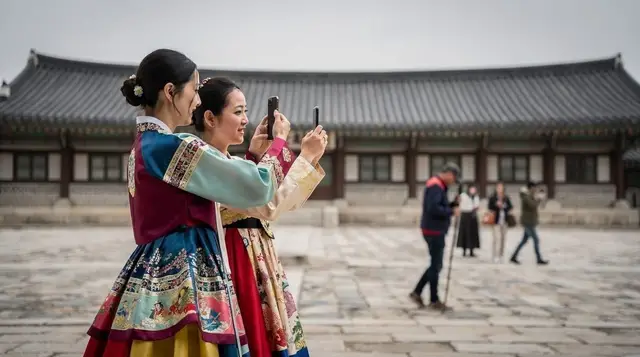
Seoul: Half-Day City Highlights & Palace Tour with Hanbok

Seoul City Sightseeing Tour Including Gyeongbokgung Palace, N Seoul Tower, and Namsangol Hanok Village