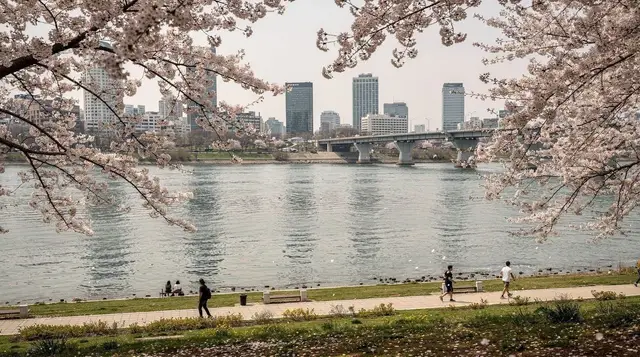
Seoul autumn foliage season
When is autumn foliage season in Seoul?
Roughly late September through mid-November, with peak color in central Seoul parks typically landing in the back half of October and lingering into early-to-mid November. It's widely considered Seoul's best overall travel season — the clearest skies and lowest rainfall of the year, with meaningfully smaller crowds than cherry blossom season.
| Season window | Late September to mid-November |
| Peak color (central Seoul) | Back half of October |
| Best spots | Bukhansan, Namsan, palace grounds, Deoksugung ginkgo path |
| Day trip option | Seoraksan (full day), Nami Island (half-to-full day) |
| Pack | Layers, sunglasses, proper shoes for granite trails |
Ask anyone who’s lived in Seoul for a few years which season they’d recommend to a first-time visitor, and a surprising number will say autumn, not spring. Cherry blossoms get the international fame, but autumn brings the year’s clearest skies, its lowest rainfall, temperatures that are comfortable for walking all day, and foliage that’s arguably just as striking as the spring blossoms — with noticeably thinner crowds outside a handful of famous spots. This guide covers when it happens, where to see it, and why it deserves more attention than it gets.
Why autumn is Seoul’s strongest season, not just a foliage window
Autumn in Seoul isn’t just about leaf color — it’s the calendar’s best stretch of weather, full stop. Rainfall drops to the year’s lowest levels, the summer humidity and heat are gone, and skies run clearer than at almost any other point in the year, which matters more than it sounds like it should in a city that spends much of the summer under haze and heavy cloud. Comfortable daytime temperatures make this the best season for the kind of walking-heavy itinerary Seoul rewards — palace grounds, hiking trails, and riverside paths are all genuinely more pleasant to cover on foot than during summer’s heat or winter’s cold snaps.
The trade-off is that autumn is not a secret — it draws real crowds, particularly on weekends during peak color, but generally fewer than the concentrated peak-bloom weekends of cherry blossom season, and spread across a longer window since foliage color develops and fades more gradually than blossoms do.
When peak color actually happens
Foliage color moves from higher elevations and northern spots down toward the city center as the season progresses, and it lasts longer than cherry blossom season overall — figure on the transition running from late September (early color starting to show at higher elevations and more exposed spots) through mid-November (last color hanging on in sheltered, lower-elevation parts of the city), with the most reliable stretch of good color across central Seoul’s parks and hillsides typically landing in the back half of October. As with cherry blossoms, the exact peak shifts year to year with temperature patterns, so check a current forecast as your trip approaches rather than locking dates in months ahead.
Where to see it in Seoul
Namsan turns color early relative to lower parts of the city, thanks to its elevation, and the hiking trails up to N Seoul Tower double as a foliage walk during the season — see Namsan Tower: cable car vs hike for how to get up there, and note that the hike is a genuinely better way to experience the color than the cable car, since you’re walking through it rather than past it.
Bukhansan National Park, on the city’s northern edge, is the single best foliage destination within Seoul’s reach for anyone willing to hike — its granite peaks and valleys turn a mix of red, orange, and gold that draws hikers specifically for the season, on top of its year-round popularity. See the Bukhansan hiking guide for trail options by difficulty.
Bukhansan Mountain hiking tourThe palace grounds, particularly Changdeokgung’s Secret Garden and Gyeongbokgung’s rear sections, layer foliage color over the architecture in a way that photographs better than either element alone — see Gyeongbokgung vs Changdeokgung vs Deoksugung for how to plan a palace visit around this.
The Han River paths and Seokchon Lake near Jamsil both carry a mix of maple and ginkgo trees that turn reliably each year — ginkgo trees in particular produce a striking, uniform gold that’s become its own minor photography trend across the city’s tree-lined streets, not just in dedicated parks.
Naejangsan and other national parks further from the city draw dedicated foliage tourism from across the country during peak weeks, but they’re a longer trip than a Seoul-based itinerary usually accommodates — worth knowing about even if it’s not the practical choice for most visitors on a city-based trip.
Beyond Seoul: Seoraksan, Korea’s most famous foliage destination
If you have a spare day and foliage is a genuine priority rather than a nice-to-have, Seoraksan National Park in Gangwon-do is widely considered Korea’s single best autumn color destination — dramatic granite peaks against a full range of red, orange, and yellow foliage draw large crowds from across the country during peak weeks, which tells you something about how highly Koreans themselves rate it relative to anything closer to Seoul.
Mt. Seoraksan National Park autumn foliage day tour from SeoulIt’s a longer day than the DMZ or Nami Island — realistically a full day with an early departure — so weigh it against your overall itinerary length. See Sokcho and Seoraksan for more on the area, including why some travelers extend it into an overnight rather than a single long day trip.
Ginkgo streets: the color most visitors don’t expect
Beyond the maple-heavy mountain and park scenery, Seoul has a distinct, city-street version of autumn color worth seeking out on its own: rows of ginkgo trees, which turn a uniform, striking gold and line long stretches of several central streets rather than being confined to parks. Deoksugung’s stone wall walking path (Jeong-dong-gil) is one of the best-known ginkgo stretches, combining the gold canopy with the palace wall itself for a genuinely photogenic short walk that takes under an hour.
Streets around Samcheong-dong, near Bukchon, pick up a similar effect, layering ginkgo gold over the hanok rooflines. This is a fundamentally different kind of autumn viewing than a mountain hike — no ticket, no elevation gain, just a slow walk down a tree-lined street — and it’s worth building into a day that also includes palace or Bukchon sightseeing rather than treating foliage as something that requires a dedicated trip out of the city.
One practical note on ginkgo trees specifically: the female trees produce a strong-smelling fruit that drops in autumn and can make sidewalks slippery and, frankly, unpleasant underfoot in the worst-affected stretches — it’s a minor but real annoyance locals are used to and visitors sometimes aren’t, so watch your step on particularly fruit-heavy sections rather than being caught off guard.
Nami Island and Gapyeong: foliage plus a day trip
Nami Island, already one of Seoul’s most popular day trips year-round, becomes a specific autumn draw thanks to its long, tree-lined entrance paths (planted decades ago and now mature enough to form genuine autumn canopies) that have become some of the most photographed tree-lined walkways in the country. Combined with the wider Gapyeong area’s mountain backdrop, it’s one of the more reliable single-day foliage trips within easy reach of Seoul, without the longer commitment a Seoraksan day requires. See Nami Island day trip for logistics on getting there.
Nami Island and Chuncheon autumn day tour from SeoulFoliage timing by location, at a glance
| Location | Typical peak | Notes |
|---|---|---|
| Bukhansan (higher elevation) | Early-mid October | Turns first thanks to altitude |
| Namsan | Mid-late October | Hike doubles as a foliage walk |
| Central palace grounds | Late October | Secret Garden layers color over architecture |
| Deoksugung ginkgo path | Late October-early November | Under an hour, no ticket needed |
| Nami Island | Late October-November | Most photographed version of the island |
| Seoraksan (Gangwon-do) | Late September-early October | Peaks earlier than Seoul itself |
Crowds and how to avoid the worst of them
Peak-color weekends at Bukhansan and Seoraksan both draw substantial crowds, since foliage viewing (called danpung in Korean) is a genuinely popular domestic activity, not just a tourist draw. Weekday visits, particularly Tuesday through Thursday, meaningfully thin the trail traffic at both. Within the city, Namsan and the palace grounds handle crowds better than a narrow mountain trail simply because there’s more space to spread out, so they’re a reasonable choice even on a busy autumn weekend if a full hiking day isn’t in the plan.
Danpung: why Koreans take autumn foliage so seriously
Danpung (단풍), the Korean word for autumn foliage, isn’t a niche hobby — it’s a mainstream, widely anticipated seasonal event that drives real domestic travel patterns each year, similar to how cherry blossom viewing drives spring travel. National park attendance spikes noticeably during peak danpung weeks, weather forecasts include foliage-progress updates alongside temperature and rain, and it’s common for Korean families and hiking clubs to plan entire weekend trips specifically around a foliage forecast.
Understanding this helps set expectations for a visiting traveler: this isn’t a quiet, undiscovered season waiting to be found — it’s a genuinely popular domestic travel period, just one that international tourism hasn’t caught up to at the same scale as cherry blossom season, which is part of why it can still feel comparatively uncrowded from a foreign visitor’s perspective even as domestic crowds are real.
A sample autumn weekend
If you’re building a foliage-focused stretch into a longer Seoul trip, a reasonable two-day sample looks like this: a full day dedicated to Bukhansan, ideally starting early to beat both crowds and any midday haze, followed by a jjimjilbang visit that evening to recover from the hike — see jjimjilbang etiquette. The second day, a slower, in-city pace: a morning ginkgo walk along Deoksugung’s stone wall path, a palace visit (Changdeokgung’s Secret Garden if you can get a booking, given the extra foliage layered over its already-strong architecture), and an afternoon at Seoul Forest or along the Han River to close out the day at a gentler pace than the previous day’s hike.
What to pack
Autumn temperatures swing more than people expect — mornings and evenings can be genuinely cool while midday sun still feels warm, especially earlier in the season. Layering works better than committing to either summer or winter clothing, and if a Bukhansan or Seoraksan hike is on the itinerary, proper hiking shoes matter more here than almost anywhere else in a Seoul-based trip, since granite trail sections get slippery when covered in fallen leaves.
Later in the season, particularly heading into November, the temperature drop becomes more pronounced and a genuine light jacket or fleece stops being optional even during the day. Sunglasses are worth packing too — autumn’s clear skies mean more direct sun exposure on open trail sections and palace courtyards than the hazier stretches of summer produce, even as the air temperature itself is more comfortable.
Comparing autumn to Seoul’s other seasons
Against spring’s cherry blossoms, autumn wins on reliability — the color window is longer and the weather is more consistently clear, versus spring’s shorter bloom and higher chance of a rained-out weekend. Against summer, autumn is a clear upgrade in every practical sense: no jangma rain, no heatwave humidity, comfortable walking conditions all day. Against winter, autumn keeps the comfortable temperatures winter loses while adding the foliage color winter doesn’t have at all.
If you’re choosing a single season to build a first Seoul trip around with no other constraints, autumn is the strongest all-around case — see the jangma rainy season guide and Seoul in August: heatwave survival guide for why summer specifically is worth avoiding if your dates are flexible.
Where this fits in a longer Seoul trip
Autumn’s clear weather makes it one of the best windows for the Seoul 3-day itinerary, the 5-day version, or the 7-day itinerary, since none of them need to build in weather contingencies the way a summer or jangma-season trip would.
If Seoraksan is on your list, the Seoul Gangwon side trip shows how to combine it with Chuncheon and the DMZ into a multi-day extension rather than a single rushed day. For hiking specifically, the Bukhansan hiking guide has trail-by-trail detail, and temple stay near Seoul is worth considering if you want a quieter, slower way to experience autumn’s mountain scenery beyond a day hike.
Frequently asked questions about Seoul autumn foliage
Is autumn really better than cherry blossom season?
Many locals and repeat visitors think so — autumn has more reliable weather, a longer color window, and generally lower crowds outside a few famous spots, even though cherry blossoms get more international attention.
When exactly does peak color happen in central Seoul?
Typically the back half of October for city parks and lower elevations, though higher spots like Bukhansan turn earlier and the exact timing shifts year to year with temperature patterns — check a forecast as your trip approaches.
Do I need to go to Seoraksan, or is Seoul’s foliage good enough?
Seoul’s own foliage — Namsan, Bukhansan, the palace grounds, the Han River paths — is genuinely worthwhile and doesn’t require a day trip. Seoraksan is a step up in scale and drama for travelers with a spare day and a specific interest in mountain scenery.
Is Bukhansan hiking suitable for beginners during foliage season?
Some trails are; others are genuinely strenuous. See the Bukhansan hiking guide for a breakdown by difficulty before committing to a specific route.
How crowded does Namsan get during foliage season?
Busier than a typical week, but nowhere near cherry blossom season’s Yeouido-level crowds — Namsan handles autumn crowds comfortably given its size and multiple trail options.
What should I wear for an autumn Seoul trip?
Layers. Mornings and evenings run cool while midday can still feel warm, especially in September and early October, and temperatures drop more noticeably as the season progresses into November.
Is rain a concern during autumn foliage season?
Not really — autumn has the lowest rainfall of any Seoul season, which is part of why it’s considered the most weather-reliable time to visit.
Can I combine autumn foliage with a DMZ or Nami Island day trip?
Yes, and it’s a popular pairing — both destinations have their own tree cover that turns with the season, adding foliage color to an itinerary that would otherwise be built around history or scenery alone.
Why do Korean weather forecasts mention foliage progress?
Because danpung (autumn foliage) is a genuinely mainstream seasonal event in Korea, similar in cultural weight to cherry blossom season — national park attendance and domestic travel patterns shift noticeably around it, so foliage-progress updates are treated as practically useful forecast information, not just a novelty.
Are Seoul’s ginkgo streets as crowded as the mountain trails?
No, generally not — a street like Deoksugung’s stone wall path draws steady foot traffic but doesn’t create the kind of trail bottlenecks you’d find at Bukhansan’s rope-assisted summit sections during peak weekends.
Does foliage season affect flight or hotel prices the way cherry blossom season does?
To a lesser extent — autumn draws real demand, particularly around peak-color weekends, but it’s generally less concentrated into a single narrow window than cherry blossom season, so pricing pressure tends to be spread across a longer stretch rather than spiking as sharply.
Seasonal experiences on GetYourGuide
Verified deep-linked GetYourGuide tours. Book through these links and we earn a small commission at no cost to you.
GetYourGuide does not provide product photos: on its activity cards, the picture illustrates the type of experience and is not the operator's own photo.