Seoul in August — heatwave survival guide
Is August a good time to visit Seoul?
No, honestly — August is Seoul's hottest, most humid month, with tropical nights that don't cool down and heat that regularly climbs well past comfortable walking-around temperatures. If you have any flexibility in your dates, autumn or spring will give you a meaningfully better trip. If August is your only option, it's still workable with the right pacing and a heavy dose of indoor, air-conditioned plans.
This guide is going to be more honest than most of what you’ll find about visiting Seoul in August, because the honest version is: it’s not a great month, and if you have any control over your dates, pick a different one. That said, plenty of people can only travel in August — school schedules, work constraints, whatever it is — and a Seoul trip in August is absolutely doable. It just needs a different approach than a spring or autumn itinerary, and it deserves realistic expectations going in rather than marketing-brochure optimism.
| Temperature | Mid-to-high 20s Celsius, feels hotter with humidity |
| Humidity | High 70s to low 80s percent |
| Nights | ”Tropical nights” — often don’t drop below ~25°C |
| Upside | Cheaper flights/hotels, thinner crowds |
| Strategy | Outdoor early/late, indoor air-conditioned midday |
Why August is genuinely the hardest month to visit
August sits at the peak of Seoul’s summer heat, with average temperatures around the mid-to-high 20s Celsius that undersell how the heat actually feels — humidity regularly pushes into the high 70s and low 80s percent range, which turns a nominally moderate air temperature into something that feels considerably hotter and stickier on the street. Tropical nights — a Korean weather term for nights that don’t drop below roughly 25°C — are common through the month, meaning even after sunset there’s little relief, and a full day of walking-heavy sightseeing followed by a night with no real temperature drop is genuinely draining over a multi-day trip.
Recent summers in Korea have set new heatwave records, part of a broader pattern of increasingly intense summer heat across the region — this isn’t a one-off bad year, it’s a trend worth taking seriously when you’re deciding how to pace an August trip. Government heat advisories are issued during the worst stretches, sometimes recommending reduced outdoor activity during peak afternoon hours for vulnerable groups, and it’s worth checking whether an advisory is active for your specific travel dates rather than assuming a “normal” August.
What this actually means for a day of sightseeing
Outdoor activities that are pleasant in October — palace courtyards, hiking, long neighborhood walks — become genuinely taxing in August heat, particularly in the early-to-mid afternoon window when temperatures and humidity both peak. Palace grounds in particular offer very little shade, and a 2-3 hour palace visit in August midday heat is a meaningfully different experience than the same visit in spring or autumn.
The practical fix is restructuring your day around the heat rather than fighting it: outdoor activities in the early morning (before roughly 10am) or evening (after 5-6pm when the worst heat starts easing), and indoor, air-conditioned activities through the hottest midday stretch. This is a genuine shift from how most Seoul itineraries are built for other seasons, and worth planning deliberately rather than discovering the hard way on day one.
Indoor, air-conditioned options for the hottest hours
Jjimjilbang (Korean bathhouses) work as a heat-relief option in a way that might sound counterintuitive — most have dedicated cool rooms and relaxation areas alongside the hot baths and saunas, and they’re a legitimately good way to spend a midday stretch out of the sun. See jjimjilbang etiquette for first-timers before your first visit.
Korean spa and massage in Myeongdong with mud bath and saunaAquariums and indoor attractions are an obvious but genuinely effective choice — fully climate-controlled and, unlike a museum, entertaining enough to work for both adults and kids on a heat-driven detour day.
Lotte World theme park and aquarium discounted 1-day passShopping malls and underground arcades, particularly COEX Mall in Gangnam (connected directly to Samseong Station) and the extensive underground passages around Myeongdong and major subway hubs, let you cover a lot of ground entirely indoors, air-conditioned, with minimal outdoor exposure between stops.
Museums, including the National Museum of Korea and the War Memorial of Korea, remain a solid midday option year-round, and August is arguably the best time to appreciate their air conditioning specifically.
Convenience stores deserve a mention here too, not as a destination but as a genuine relief stop — most have air conditioning, cold drinks, and often a small seating area, and ducking into one for ten minutes during a heat spike is a completely normal thing to do in Seoul during summer. See the convenience store food guide for what’s actually worth buying while you’re in there.
Staying hydrated and avoiding heat exhaustion
Seoul’s convenience store density (a store on nearly every block in central neighborhoods) makes staying hydrated genuinely easy — cold water and sports drinks are cheap and everywhere, and there’s little excuse for running dry on a hot day. Watch for early signs of heat exhaustion: dizziness, excessive sweating that suddenly stops, headache, and nausea are all cues to get indoors and cool down rather than pushing through. Sunscreen matters more in August than most visitors expect, given the direct sun exposure on unshaded palace courtyards and open plazas.
Electrolyte drinks, widely available at convenience stores alongside plain water and sports drinks, are worth reaching for over plain water alone on the hottest days, since heavy sweating through a full day of walking depletes more than just hydration. Pacing your water intake steadily through the day, rather than a large amount all at once, also helps more than most visitors expect.
Bingsu and Seoul’s shaved-ice café culture
If there’s one food trend that peaks specifically in August, it’s bingsu, Korean shaved ice topped with anything from sweet red bean and rice cakes to fresh fruit and condensed milk. Dedicated bingsu cafés do serious business through the hottest weeks of summer, and it’s a genuinely enjoyable way to combine a heat-relief stop with something more interesting than just sitting in air conditioning — most bingsu cafés are also naturally well air-conditioned, given the product they’re selling, so it does double duty as both a treat and a cooling break. Bingsu spots cluster in Myeongdong, Hongdae, and Gangnam in particular, all areas already likely on a typical sightseeing route.
Rooftop bars and evening heat relief
While midday August heat rules out most outdoor daytime activities, evening rooftop bars — common across Itaewon, Hongdae, and parts of Gangnam — come into their own once the sun sets and a light breeze at elevation takes some of the edge off the day’s heat. It’s not the same as a cooler-season evening, but the combination of city views, a drink, and enough elevation to catch airflow makes for one of the more pleasant ways to spend an August evening outdoors, especially compared to trying to sightsee at street level during the same hours.
Han River and evening activities
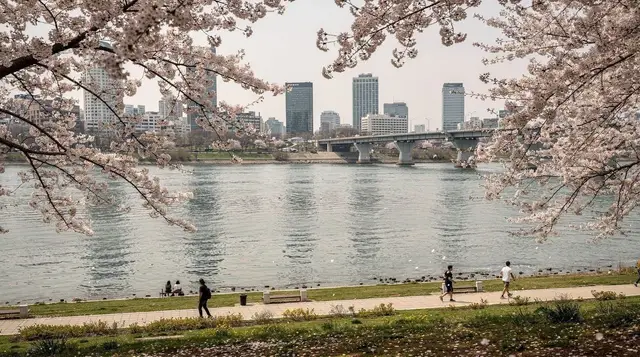
The Han River comes into its own in the evening during August — once the sun is down and temperatures ease slightly, riverside parks fill with locals picnicking, and it’s one of the most pleasant ways to spend a summer evening in the city. A Han River evening also pairs naturally with convenience-store-bought snacks and drinks (a genuinely popular local tradition, not just a tourist workaround), turning what would be an expensive restaurant evening in peak heat into a relaxed, affordable one. See Yeouido and the Han River for specifics.
What to wear and what to carry
Lightweight, breathable, moisture-wicking fabric matters more in August than any packing list item for another season — cotton that stays damp with sweat all day is genuinely uncomfortable, and quick-dry synthetic or linen-blend clothing handles the humidity noticeably better. A hand fan (sold cheaply almost everywhere, including convenience stores and street vendors) is a genuinely useful, low-tech tool that a lot of visitors underestimate, and it’s worth carrying one rather than relying purely on shade and air conditioning.
A small portable battery fan, widely available and cheap in Korea during summer, is another common local solution worth picking up on day one rather than toughing it out. Sun protection — a hat, sunglasses, and reapplied sunscreen — matters more than usual given the direct exposure on unshaded palace courtyards, riverside paths, and open plazas.
Traveling with kids or elderly family members in August heat
August heat hits children and older travelers harder and faster than it hits fit adults, and the standard advice to restructure the day around the heat applies even more strictly for family groups. Build in more frequent indoor breaks than you think you need, treat any sign of flushed skin, unusual tiredness, or crankiness in kids as a cue to get indoors immediately rather than pushing through “just one more stop,” and lean harder on the indoor options in this guide — aquariums, malls, jjimjilbang cool rooms — as core parts of the day rather than occasional detours. See Seoul with kids for broader family pacing advice that becomes especially important during an August trip.
What to genuinely skip in August
Extended hiking days — Bukhansan or similar — are a much harder sell in August heat than in cooler months, and the risk of heat exhaustion on an exposed granite trail is real. If hiking is a must, go as early as possible (starting before sunrise for serious trails) and treat a full-day summit attempt with real caution. Long, unbroken outdoor walking tours through multiple neighborhoods in the same afternoon are also worth restructuring — break them up with indoor stops rather than pushing through in one stretch.
How Seoul’s August compares to other Asian summer destinations
If you’re weighing Seoul in August against alternative destinations or dates, it’s worth knowing Seoul’s summer heat, while genuinely tough, is generally less extreme than the peak humidity of Southeast Asian cities during their own hot seasons — Seoul’s advantage is a well-developed indoor infrastructure (extensive air-conditioned subway, malls, and cafés) that makes escaping the heat easier than in cities with less indoor sightseeing density. That’s a small consolation on a sweaty afternoon, but it does mean an August Seoul trip, while not ideal, is more manageable in practice than the raw temperature and humidity numbers alone might suggest.
What August still has going for it
It’s not all downside. August is genuinely one of the cheaper months to find flights and accommodation, since it falls outside Seoul’s peak spring and autumn demand windows (school holidays elsewhere sometimes push the opposite effect, so check pricing for your specific dates rather than assuming). Crowds at major attractions also thin out compared to spring or autumn, since heat deters a meaningful share of both domestic and international tourism. If budget and lower crowds matter more to you than ideal weather, August is a legitimate trade-off, not just a bad month to tolerate.
August versus the rest of the year, honestly
| Month | Weather | Crowds | Verdict |
|---|---|---|---|
| August | Hottest, most humid, tropical nights | Thinner than spring/autumn | Workable with heavy indoor pacing |
| Spring (Apr-May) | Mild, cherry blossom season | Very heavy | Great weather, worst crowds/prices |
| Autumn (Sep-Nov) | Cool, clear, foliage | Heavy but manageable | Generally the best trade-off |
| Winter (Dec-Feb) | Cold, near/below freezing | Moderate | Good for lights, hard for long outdoor days |
August’s real advantage isn’t the weather — it’s the combination of lower prices and thinner crowds at major attractions, which is a genuine trade-off for travelers with fixed August dates rather than a consolation prize.
Where this fits in a longer Seoul trip
If your dates genuinely can’t move, pace the trip realistically using this guide’s indoor options, and consider temple stay near Seoul or jjimjilbang etiquette as ways to build in genuine rest rather than pushing a full sightseeing schedule through the hottest days.
The convenience store food guide becomes more useful in August than any other season, given how often a quick air-conditioned stop matters. If you do have flexibility, the Seoul autumn foliage guide makes the strongest case for a better alternative month, and the jangma rainy season guide covers the wet stretch that typically precedes August’s heat, in case your trip spans both.
For itinerary pacing specifically, the Seoul 3-day itinerary and Seoul with kids are both worth rereading with August heat in mind — both assume a level of full-day outdoor activity that needs real adjustment for summer heat.
Frequently asked questions about visiting Seoul in August
Is Seoul unbearably hot in August?
It’s genuinely challenging — high heat combined with high humidity and tropical nights that don’t cool down. It’s not unbearable with the right pacing, but it’s a meaningfully harder trip than spring or autumn.
Is it worth visiting Seoul in August if I have flexible dates?
No, not if avoiding it is realistic. Autumn in particular offers clearer skies, comfortable temperatures, and generally thinner crowds than August’s heat produces.
What’s the single best way to cope with August heat in Seoul?
Restructure your day around the heat: outdoor sightseeing in early morning or evening, indoor air-conditioned activities through the midday peak.
Are jjimjilbangs actually good for cooling down, or just for winter?
They work well year-round, including summer — most have dedicated cool rooms alongside the hot facilities, making them a legitimate heat-relief stop rather than just a winter activity.
Is hiking Bukhansan safe in August?
It’s riskier than in cooler months due to heat exhaustion risk on exposed trail sections. If you go, start very early and carry more water than you think you’ll need.
Does August have any real advantages over other months?
Yes — generally lower prices outside specific holiday spikes, and thinner crowds at major attractions compared to spring and autumn peak season.
Are tropical nights really that disruptive?
For a lot of visitors, yes — nights that don’t meaningfully cool down make it harder to recover from a hot day of sightseeing, particularly if your accommodation’s air conditioning isn’t strong.
Should I change my itinerary pacing for an August trip?
Yes. Plan for more indoor stops, shorter outdoor stretches, and more rest breaks than you would for a spring or autumn Seoul itinerary — treat it as a different kind of trip, not the same itinerary in hotter weather.
Is bingsu really worth seeking out in August?
Yes, genuinely — it’s a real seasonal food experience, not just a tourist gimmick, and dedicated bingsu cafés are naturally well air-conditioned, making it one of the more enjoyable ways to combine a treat with a heat-relief break.
Are rooftop bars a good option during an August trip?
In the evening, yes — once the sun sets and temperatures ease slightly, rooftop bars in areas like Itaewon and Hongdae offer a genuinely pleasant way to be outdoors again after a day spent mostly indoors avoiding the heat.
What are the warning signs of heat exhaustion I should watch for?
Dizziness, sudden stopping of sweating despite heat, headache, and nausea are all signals to get indoors and cool down immediately rather than pushing through the rest of a planned activity.
Seasonal experiences on GetYourGuide
Verified deep-linked GetYourGuide tours. Book through these links and we earn a small commission at no cost to you.
GetYourGuide does not provide product photos: on its activity cards, the picture illustrates the type of experience and is not the operator's own photo.