Seoul travel budget: what a real day actually costs
How much does a day in Seoul actually cost?
Roughly 50,000 KRW a day for a bare-bones backpacker budget (hostel dorm, street food, walking and subway), 150,000-200,000 KRW a day for a comfortable mid-range trip (private hotel room, sit-down meals, occasional taxi), and 400,000 KRW or more a day once you add premium hotels, fine dining, and private tours. Transport and museum admission are genuinely cheap in Seoul relative to comparable cities — accommodation and dining choices are what actually move your daily total.
| Backpacker | Around 50,000 KRW/day |
| Mid-range | Around 150,000-200,000 KRW/day |
| Luxury | 400,000 KRW/day or more |
| Biggest lever | Accommodation, by far |
| Tipping | Not expected anywhere |
Every “Seoul on a budget” article throws out a single number, as if backpackers and honeymooners spend the same way. They don’t, and the gap between a bare-bones day and a comfortable one in Seoul is wide enough that a single figure isn’t useful. Here’s a realistic breakdown by travel style, and what actually drives the difference.
Backpacker: roughly 50,000 KRW a day
This covers a hostel dorm bed (typically 18,000-28,000 KRW a night in popular areas like Hongdae, Myeongdong, or Itaewon), street food and convenience store meals, and getting around almost entirely on foot and subway. It’s a genuinely doable daily budget in Seoul — the city’s cheap, excellent street food and reliable public transit do a lot of the work here, and you’re not sacrificing much in terms of actually seeing the city, since sightseeing itself (palaces, markets, walking neighborhoods) is inexpensive regardless of your accommodation tier.
A realistic backpacker day breaks down roughly like this: hostel dorm bed around 20,000-25,000 KRW, three meals mixing convenience store food and street food stalls around 15,000-20,000 KRW total, and transit around 5,000 KRW covering several subway or bus rides — landing close to the 50,000 KRW target with a little room for a small extra like a coffee or a snack. The main sacrifice at this tier isn’t food quality (Seoul’s cheap eats are genuinely good) but rather privacy and the occasional paid activity, since a backpacker budget doesn’t comfortably absorb guided tours, spa visits, or premium experiences without dipping into savings elsewhere.
Mid-range: roughly 150,000-200,000 KRW a day
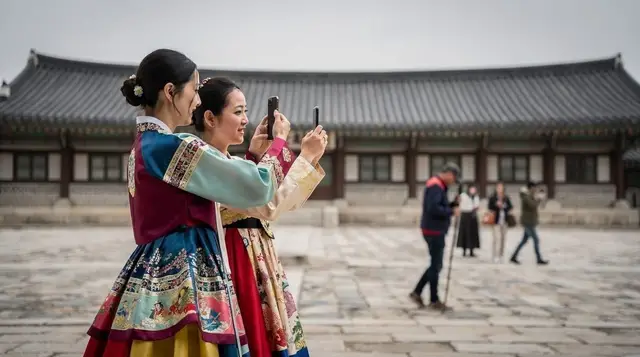
This is where most visitors actually land: a private double hotel room (80,000-120,000 KRW a night for a standard option), a mix of sit-down restaurant meals and street food, occasional taxis layered on top of regular subway use, and room in the budget for paid activities — a guided tour, a hanbok rental, a cooking class — without treating every purchase as a splurge. This tier gets you a genuinely comfortable trip without needing to chase the most expensive version of everything.
Luxury: 400,000-850,000+ KRW a day
At the top end, the ceiling is essentially open — five-star hotels, Michelin-recognized dining, private guided tours, and premium experiences (private car charters, VIP palace tours) push daily spending well past 400,000 KRW, with genuinely no upper limit if you’re chasing the most exclusive version of everything Seoul offers. A VIP private tour by chauffeured Mercedes-Maybach sits comfortably at this end of the spectrum if a fully private, high-comfort way of seeing the city matters more to you than cost.
What actually moves the needle
Accommodation is the single biggest lever, by a wide margin. The gap between a hostel dorm bed and a private mid-range hotel room can run 60,000-80,000 KRW a night or more, and that difference alone accounts for most of the gap between the backpacker and mid-range daily totals above. Food and transport vary too, but nowhere near as dramatically — you can eat extremely well in Seoul on a modest budget, and public transit is cheap enough (see below) that it barely moves a mid-range or luxury budget at all.
Transport is genuinely inexpensive. For most sightseeing days involving several subway or bus rides, figure on roughly 5,000-10,000 KRW in fares using a T-money card, thanks to free transfers within the transfer window between subway and bus. Our Seoul metro and T-money guide covers the fare structure and transfer rules in detail, and whether a multi-day transit pass is worth it for your specific itinerary — for most visitors doing a moderate number of rides a day, it usually isn’t. A Seoul city pass bundling transit with attraction discounts can shift that math if you’re planning a heavily packed sightseeing schedule.
Palaces and museums are cheap, sometimes free. Admission to the five royal palaces and most museums runs just a few thousand KRW per site at most, and it’s free entirely at any of the five royal palaces if you’re wearing a complete hanbok — see our hanbok rental and free palace entry guide for the specific rules on what qualifies.
No tipping, anywhere. Korea has no tipping culture — not in restaurants, not in taxis, not in most other service contexts — which simplifies budgeting compared to countries where a 15-20% tip is the norm. Treat posted and metered prices as your actual final cost.
Food quality doesn’t scale linearly with price the way it does in a lot of cities. Some of the most memorable eating in Seoul — Gwangjang Market’s street food stalls, a neighborhood kalguksu shop, convenience store meal combos — sits at the cheap end of the spectrum, while some genuinely mediocre food gets charged tourist-strip prices purely on location. Budget travelers eating well in Seoul isn’t really a compromise the way it can be in cities where good food is reliably expensive; it’s closer to the default, provided you’re eating where locals actually eat rather than exclusively at restaurants clustered around major attractions.
Connectivity costs are small but worth planning for. An eSIM or local SIM typically runs a modest weekly rate, considerably cheaper bought online in advance than at an airport counter on arrival — see our guides on why Google Maps doesn’t work in Korea and Incheon vs Gimpo airport for where to sort this out. It’s a small line item relative to accommodation or food, but staying connected affects nearly everything else about how smoothly the trip runs, from navigation to translation to booking last-minute activities.
Seasonal price swings
Accommodation prices swing noticeably around Seoul’s two peak visual seasons — cherry blossom in spring and peak foliage in autumn — when hotel rates in popular areas climb well above shoulder-season baseline and availability tightens considerably. See our cherry blossom and autumn foliage guides for exact timing windows if you’re trying to either catch or avoid the seasonal price spike. Food and transport costs, by contrast, stay largely flat year-round regardless of season — it’s specifically accommodation that responds to seasonal demand this sharply.
Budgeting for day trips separately
Day trips are worth budgeting as their own line item rather than folding into your average daily city spend, since a guided tour to somewhere like the DMZ, Nami Island, Everland, or Suwon typically adds transport and admission costs on top of a normal day’s expenses. A data eSIM bundled with T-money is a small but real recurring cost worth accounting for from day one, separate from your daily food-and-activities estimate, since staying connected for navigation and translation apps matters throughout the whole trip, not just on day-trip days.
As a rough planning figure, a well-organized guided day trip (transport plus admission plus a meal) tends to land somewhere in the tens of thousands of KRW per person, varying considerably by destination — a standard DMZ tour sits toward the lower end of that range, while a full day combining Nami Island with Petite France or the Garden of Morning Calm, or an Everland day with pre-booked tickets, sits higher given the admission costs layered on top of transport. Booking two or three day trips across a longer stay adds up to a genuinely significant chunk of overall trip spending, so it’s worth deciding upfront how many day-trip days matter most to you rather than trying to fit in every option covered elsewhere on this site.
A sample week, roughly priced
For a concrete sense of how these pieces combine, a mid-range week in Seoul might break down as: five city days at roughly 150,000-200,000 KRW each covering accommodation, food, local transport, and a couple of paid activities, plus two day-trip days adding a further chunk on top for guided tours and their associated transport and admission costs. That points to a realistic mid-range week landing somewhere in the 1,200,000-1,600,000 KRW range total per person, excluding international flights — a useful ballpark for setting an overall trip budget before you start booking individual pieces.
How Seoul compares to other cities
Seoul sits comfortably in the middle of the pack among major Asian capitals — noticeably pricier than Southeast Asian cities, but generally more affordable than Tokyo or Hong Kong for comparable accommodation and dining quality, and clearly cheaper than most major Western European or North American cities across nearly every category. Transport and public infrastructure in particular offer a lot of value for the price — Seoul’s subway system rivals or beats much pricier cities’ systems on both cost and quality.
Three budget tiers, side by side
| Backpacker | Mid-range | Luxury | |
|---|---|---|---|
| Daily total | ~50,000 KRW | 150,000-200,000 KRW | 400,000 KRW+ |
| Accommodation | Hostel dorm, 18,000-28,000 KRW | Private hotel, 80,000-120,000 KRW | Five-star hotel |
| Food | Convenience store + street food | Mix of sit-down and street food | Michelin-recognized dining |
| Transport | Subway/bus, on foot | Subway plus occasional taxi | Private car charter |
| Activities | Free sightseeing mostly | A guided tour or spa visit here and there | VIP private tours |
Trimming costs without feeling like you’re missing out
A few adjustments move a mid-range budget noticeably closer to a backpacker one without actually sacrificing much of the experience. Eating where locals eat — Gwangjang Market’s stalls, neighborhood kalguksu shops, convenience store meal combos — genuinely rivals sit-down restaurant food in Seoul, so trimming the dining budget rarely means trimming quality the way it might elsewhere. Timing accommodation bookings outside the cherry blossom and autumn foliage peaks avoids the sharpest seasonal price spikes. And since palace and museum admission is already cheap, a full hanbok rental that unlocks free entry to all five royal palaces pays for itself quickly if you’re visiting more than one or two.
Putting a realistic budget together
Pick your baseline tier from the three above, then layer on day trips, any splurge activities (a K-pop dance class, a premium spa visit, a private tour), and a seasonal accommodation adjustment if you’re traveling during cherry blossom or autumn foliage. For a fuller sense of what a realistic week looks like once you add all these pieces together, see our Seoul 5-day itinerary and Seoul 7-day itinerary, both of which map spending patterns across a real multi-day trip.
If accommodation choice is the main lever for your budget, where to stay in Seoul breaks down neighborhood-by-neighborhood price expectations, and our Seoul taxi and restaurant scams guide covers the two situations most likely to blow a careful budget without warning.
Seoul rewards a bit of budget planning more than a lot of destinations do — the gap between doing it cheaply and doing it comfortably is genuinely wide, but neither end requires sacrificing much of what makes the city worth visiting in the first place.
Trip-planning essentials on GetYourGuide
Verified deep-linked GetYourGuide tours. Book through these links and we earn a small commission at no cost to you.
GetYourGuide does not provide product photos: on its activity cards, the picture illustrates the type of experience and is not the operator's own photo.