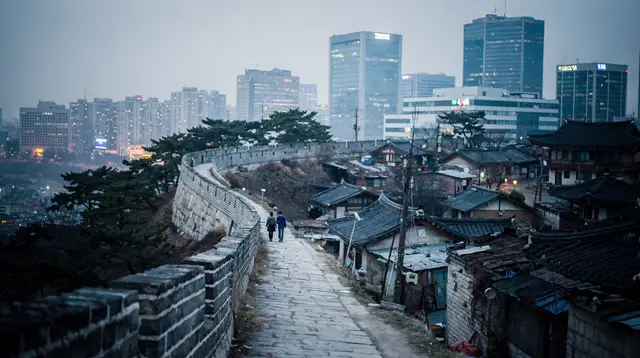
Two districts, two very different Incheons
Incheon is Korea’s third-largest city and a genuinely distinct destination from both Seoul and its own international airport, a distinction that trips up more visitors than you’d expect — see our Incheon vs. Gimpo airport guide if the airport-versus-city confusion is part of what brought you to this page. The city itself, connected to Seoul by a direct subway line, offers two neighborhoods worth a dedicated visit for very different reasons: Incheon Chinatown, Korea’s oldest and largest, and Songdo, a purpose-built international business district known for striking modern architecture and a large central park.
Treating these as a single half-day trip works well precisely because they contrast so sharply — one is a dense, historic, food-focused neighborhood; the other is a spacious, ultra-modern planned city that feels almost nothing like the rest of Korea.
| Where | Incheon Chinatown (Incheon Station, Line 1) and Songdo, greater Incheon |
| Cost | Free to wander; jjajangmyeon around 7,000–9,000 KRW; tours vary |
| Time needed | Half day for Chinatown alone; a full day if adding Songdo |
| Getting there | Around 40–60 minutes by subway from central Seoul |
| Best time | Spring or autumn for walking; the food works in any season |
Incheon Chinatown: Korea’s oldest
Incheon Chinatown dates to 1883, when the port opened to Chinese merchants following the opening of Incheon (then Jemulpo) to foreign trade, and it remains the largest and most historically significant Chinese community in Korea. Unlike some Chinatowns that have become primarily commercial tourist zones with little remaining connection to the community that built them, Incheon’s retains a genuine mixed identity — Chinese-Korean families still live and work in the area, and the food reflects a specific hybrid cuisine (jjajangmyeon, the black bean noodle dish now considered a Korean comfort food staple, was reportedly invented here) rather than a generic pan-Asian tourist menu.
Walking the neighborhood, expect red lanterns, ornate gates, murals depicting scenes from Chinese folklore along a dedicated storytelling alley, and a dense concentration of restaurants serving jjajangmyeon and other Chinese-Korean dishes. It’s compact enough to walk in an hour or two, though lingering over a meal easily extends that.
What to eat in Chinatown
Jjajangmyeon is the dish to prioritize — noodles in a thick black bean sauce, considered a defining Korean-Chinese comfort food rather than an import from China itself, and Incheon Chinatown is widely credited as its birthplace. Multiple long-established restaurants along the main street compete for the “original” or “best” jjajangmyeon claim, and honestly, several are worth trying rather than hunting for a single definitive answer — a food-focused visit benefits from sampling more than one.
Beyond jjajangmyeon, look for tanghuru (candied fruit skewers), Chinese-style pastries and mooncakes from bakeries along the main strip, and other Chinese-Korean staples like jjamppong (spicy seafood noodle soup). A guided walk-and-eat tour of Incheon with a local buddy is a reasonable way to get past the most touristy storefronts toward the spots locals actually favor, useful if you don’t want to rely on guesswork or online reviews alone.
Songdo: Korea’s planned smart city
Songdo, a substantial distance from Chinatown within greater Incheon, is a purpose-built international business district developed largely on reclaimed land starting in the early 2000s, designed around smart-city infrastructure, LEED-certified buildings, and a central park modeled loosely on New York’s Central Park. The contrast with Chinatown’s dense, century-old streets is total — Songdo is wide, spacious, architecturally uniform in a modern glass-and-steel way, and noticeably quieter, with a population density far below central Seoul.
Central Park (Songdo Central Park) is the district’s main public space, with a waterway you can navigate by small boat, walking and cycling paths, and open lawns that feel distinctly different from anything in central Seoul’s more built-up green spaces. The Tri-bowl, a distinctive inverted architectural landmark near the park, and several striking commercial towers make Songdo a reasonable stop for anyone interested in contemporary architecture and urban planning.
Songdo at night
Songdo’s skyline and waterfront take on a different character after dark, with illuminated towers reflecting off Central Park’s waterway — a private Incheon night tour focused on Songdo Central Park is worth considering if your schedule allows an evening visit, since the daytime experience (pleasant but architecturally straightforward) and the nighttime experience (genuinely photogenic) offer meaningfully different impressions of the district.
Getting there and connecting the two
Incheon Chinatown is reached via Incheon Station on Seoul’s Line 1, making it directly accessible by subway with no bus transfer required — one of the more straightforward day trips from central Seoul in terms of public transport simplicity. Songdo, however, sits a meaningful distance from Chinatown within Incheon’s sprawling metro area and isn’t within comfortable walking distance; connecting between the two requires a taxi, bus, or a longer subway journey via a transfer, adding real time to a combined visit.
Given this, a combined Chinatown-and-Songdo day works better as an organized tour with dedicated transport between the two than as an independent trip pieced together via public transit, unless you’re comfortable navigating Incheon’s local bus network. A Incheon Chinatown, rail bike, and Eco Park tour from Seoul covers Chinatown alongside a different set of Incheon attractions if Songdo isn’t your priority, while a Incheon stopover city highlights tour for K-culture fans is designed specifically around travelers combining a city visit with an airport layover.
Incheon as a layover stop
Because Incheon Airport sits within the wider Incheon metro area, travelers with a long layover sometimes consider a quick trip into the city rather than staying airside — see our Seoul airport layover guide for the broader logistics of this decision, including immigration and re-entry timing. If you’re specifically weighing a layover visit to Incheon city rather than a full trip into central Seoul, Chinatown’s proximity to Incheon Station and its manageable, compact scale make it one of the more realistic layover destinations, assuming your layover window comfortably covers transport time plus a buffer for delays.
Jayu Park and the harbor area
Jayu Park (Freedom Park), on a hill above Chinatown, was Korea’s first Western-style public park, opened in the late 19th century, and offers a pleasant elevated walk with views over Incheon’s harbor and the surrounding city. It’s a short, easy add-on to a Chinatown visit rather than a destination requiring separate planning, and it provides useful historical context on Incheon’s role as one of Korea’s first ports opened to foreign trade — a history that directly explains why Chinatown exists here in the first place.
How much time to budget
A half day comfortably covers Chinatown, including a proper meal and a walk up to Jayu Park. Adding Songdo pushes the visit toward a full day once you factor in transit time between the two districts. If you only have time for one, Chinatown is the stronger standalone choice for most travelers given its food, walkability, and unique historical character; Songdo is more of an architecture-and-planning curiosity that appeals most to visitors with a specific interest in urban design or those looking for a striking evening photo opportunity.
A port city’s layered history
Incheon’s role in Korean history goes well beyond Chinatown’s origin story. The city was one of the first Korean ports forced open to foreign trade under 19th-century treaties with Japan, China, and Western powers, and the resulting mix of foreign concessions left a physical legacy still visible today — not just Chinatown, but a scattering of colonial-era buildings from the Japanese and various Western trading communities that once operated here, some restored as small museums, others simply preserved as functioning structures within the modern city.
Incheon later became internationally significant again during the Korean War as the site of the 1950 Incheon Landing, General Douglas MacArthur’s amphibious operation that turned the war’s early trajectory — a nearby memorial and museum context covers this history for visitors specifically interested in the military side of the city’s past, distinct from Chinatown’s trade-focused story.
This layered history is part of what makes Incheon a more textured destination than its reputation as “the airport city” suggests. Where central Seoul’s history concentrates heavily around royal and dynastic Korea, Incheon’s is defined by contact with the outside world — trade, colonization, and, later, war — which shows up physically in the mix of architectural styles within a few blocks of Chinatown’s main gate.
Shopping and modern Incheon
Beyond Chinatown and Songdo, Incheon has its own contemporary retail and entertainment districts that don’t typically make it onto short-trip itineraries but are worth knowing about if you’re staying in the city longer or exploring beyond the two headline neighborhoods. These areas function much like equivalent districts in Seoul — large shopping complexes, multiplex cinemas, and chain restaurants — without the specific historical or architectural distinction that makes Chinatown and Songdo worth a dedicated visit. For most travelers with limited time, they’re skippable in favor of the two districts covered above.
Fitting Incheon into a longer Seoul trip
Incheon works best as a change of pace inside a wider plan rather than as a trip of its own. On a first visit, the 3-day Seoul itinerary is already full, so Incheon fits more naturally into the 5-day Seoul itinerary or the Seoul day trips week, where one slot can go to a port city that feels nothing like the capital. If you are still sorting out which part of Seoul suits you, Seoul neighborhoods explained helps you decide how much time the city proper deserves before you head west.
Food is the thread that ties the day together. After a Chinatown meal, the Seoul street food guide is a good way to see how Korean-Chinese dishes sit alongside the rest of the country’s snack culture, and the guide to Korean etiquette mistakes is worth a skim before you share a table at a busy restaurant.
If Incheon leaves you wanting more of the countryside and coast around the capital, Ganghwa Island and the Paju and Heyri area make natural companions on other days, each with a very different mood from Chinatown’s lanterns and Songdo’s glass towers.
A realistic budget and practical notes
Chinatown itself costs nothing beyond food — a bowl of jjajangmyeon runs roughly 7,000-9,000 KRW, and tanghuru or bakery snacks add a few thousand more. Songdo’s Central Park is free to walk; the small-boat rides on the waterway are a modest add-on if you want them. A T-money card covers the subway fare out from Seoul the same as anywhere else in the city — see the Seoul metro and T-money guide for how the card system works if you haven’t set one up. For how an Incheon day compares to a typical day in central Seoul, the Seoul budget guide has the broader context.
If you’re weighing Incheon against a stay closer to the airport for a multi-day trip, where to stay in Seoul covers neighborhood trade-offs, including how much a base near Incheon versus central Seoul affects your daily commute time to the city’s main sights.
Frequently asked questions about Incheon Chinatown and Songdo
Is Incheon Chinatown the same as Chinatowns in other countries?
Not exactly — the food and culture here reflect a specific Chinese-Korean hybrid identity that developed over more than a century, rather than mirroring the cuisine or atmosphere of Chinatowns in cities like San Francisco or London. Jjajangmyeon in particular is a dish that doesn’t exist in this exact form in China itself.
Can I visit Incheon Chinatown as a layover activity?
Yes, if your layover window is long enough to comfortably cover transport, immigration re-entry, and a buffer for delays. Chinatown’s direct subway access from Incheon Station makes it one of the more realistic layover-friendly destinations near the airport.
How far is Incheon from Seoul?
Roughly 40-60 minutes by subway from central Seoul to Incheon Station, depending on your starting point, making it a manageable half-day or full-day trip rather than a significant travel commitment.
Is Songdo worth visiting if I’m not interested in architecture?
It’s a more niche interest than Chinatown for most travelers — Songdo’s appeal is largely about contemporary urban design and its striking, unusually spacious skyline, so travelers without particular interest in that will likely get more out of prioritizing Chinatown or other Seoul-area attractions instead.
What’s the best single dish to try in Incheon Chinatown?
Jjajangmyeon is the essential choice, given its origin story in this specific neighborhood. Trying it at more than one restaurant is a reasonable way to compare styles rather than assuming any single restaurant’s version is definitive.
Is Incheon Chinatown crowded?
It can get busy on weekends and holidays, particularly around the main food street, though it rarely reaches the density of Seoul’s most crowded markets. Weekday visits are noticeably calmer.
Do I need a car to get between Chinatown and Songdo?
Not necessarily, but public transport between the two districts involves a longer connection than either destination’s individual subway access suggests. A taxi, local bus, or organized tour is generally more efficient than piecing together the connection independently.
Is Incheon safe to visit?
Yes, Incheon is a major Korean city with the same general safety profile as Seoul, and neither Chinatown nor Songdo presents particular safety concerns for typical daytime or evening tourist activity.
Does Incheon Chinatown get busy during Chinese New Year?
Yes, the neighborhood hosts dedicated Lunar New Year celebrations and decorations that draw larger crowds than a typical weekend, with extended lantern displays and occasional cultural performances. If you’re visiting specifically for this, expect a livelier but more crowded atmosphere than an off-season visit.
Can I combine Incheon Chinatown with Ganghwa Island in one day?
It’s geographically possible since both fall within greater Incheon, but the travel time between them is substantial enough that most travelers treat them as separate day trips rather than combining both into a single outing — see our Ganghwa Island guide for that trip on its own terms.